
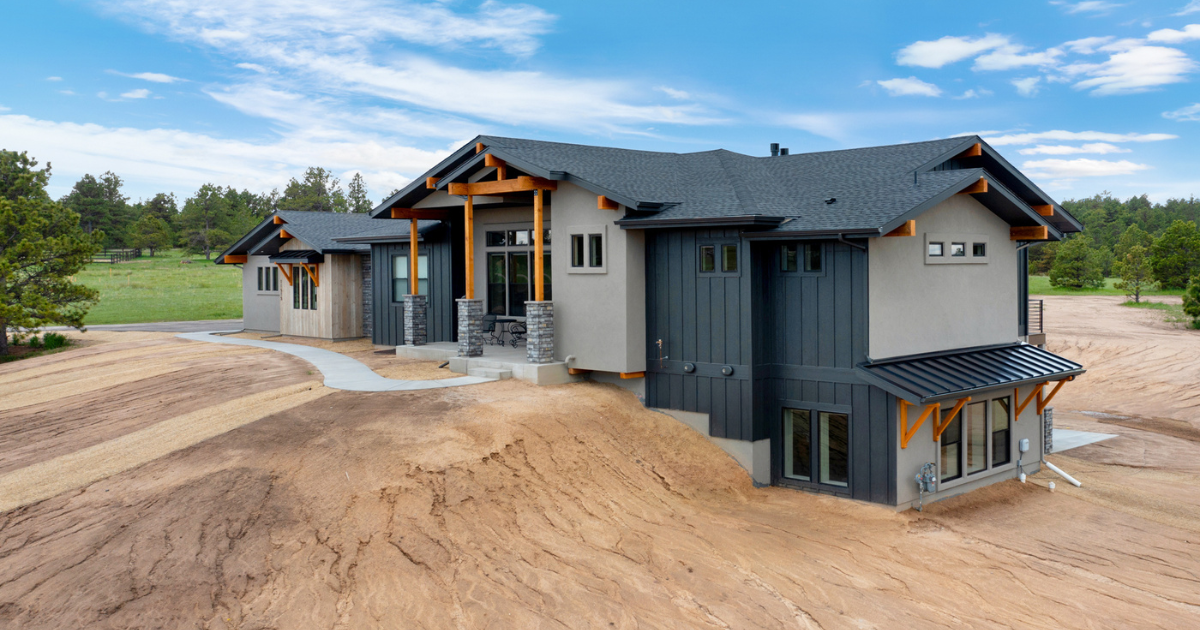
Key Takeaways
- The Colorado Front Range Area has slopes ranging from 5% to 20% in the lower foothills, typically 20% to 40%, and steeper in the higher elevations.
- These slopes present unique challenges for custom home building, which Colorado Springs-based Murphy’s Custom Homes is well-experienced in meeting.
- Building foundations on slopes exceeding 10% typically requires specialized engineering, and building codes mandate geotechnical engineering and slope stability analysis reports to secure a building permit on lots with grades exceeding 15%.
- Building on a sloped lot adds costs to custom home construction, which can increase dramatically with the slope’s steepness.
- Several foundation options have proven effective at building on a sloped lot in Colorado.
If you’re planning to build a custom home in the Colorado Springs Front Range area, good luck finding a level building lot. Consider that in El Paso County, the land rises from about 4,600 feet above sea level at the eastern county line to over 14,000 feet at Pikes Peak. With mountains rising straight out of the plains, the average grade is about 8.7%, but punctuate this average with plenty of rolling ridges, washes, gulches, rock outcrops, and steep foothill slopes before you even get to the Front Range mountains. While grades range from 5% to 20% in the lower foothills, in higher elevations, slopes typically range from 20% to 40%, with the most rugged elevations seeing grades between 40% to 70%.
Thus, to build a custom home in the Colorado Springs area, you should budget extra money for grading and structural engineering to site your structure on the grade properly. With more than 35 years of experience building homes in the Front Range counties of El Paso, Douglas, and Elbert, Murphy’s Custom Homes knows everything about building on sloped lots. To help you understand what you need to know before starting your home-building project, here are the top questions our clients ask us about building on a sloped lot in Colorado.
At What Point Does a Lot’s Grade Require Special Engineering?
Generally speaking, Colorado home builders can construct a regular slab-on-grade, crawl space, or full basement foundation on lots with slopes of 10% or less. Grades exceeding 10% usually require special engineering, while building codes mandate geotechnical engineering and slope stability analysis reports to secure a building permit on lots with grades exceeding 15%. Construction on slopes exceeding 20% requires input from civil and structural engineers to ensure proper grading, drainage, and structural design.
How Much Slope is Too Steep for Home Building in Colorado?
Regulatory restrictions and excessive construction costs make building on lots with a slope steeper than 25% highly challenging. Most Colorado Front Range jurisdictions require special reviews of proposed construction when grades reach 25% to 30%, and are highly restrictive in granting building permit approvals. While El Paso, Douglas, and Elbert Counties consider slopes greater than 30% as a geologic hazard requiring special reviews and possible variances for permitted construction, the City of Colorado Springs has a lower threshold of 25%.
A few Front Range jurisdictions have approved permits for homes on slopes between 40% and 55%, with plans supported by extensive, costly engineering solutions. However, many jurisdictions, including those served by Murphy’s Custom Homes in Colorado Springs, essentially prohibit it.
How Much More Does it Cost to Build on a Sloped Lot?
Building a custom home on a sloped lot in the Colorado Springs area carries a significant premium over building on a relatively flat lot, which custom builders express to their clients with local idioms like:
- Every 10% increase in slope results in a corresponding increase in total home construction costs by an equal amount.
- Foundation costs increase exponentially past the 20% grade.
- Steep site, steep price.
- 10% steeper goes 10% deeper into your wallet.
The actual extra costs of building on a sloped lot depend on numerous variables, including:
- Degree of slope steepness
- Soil type
- Bedrock depth
- Stabilization needed
- Drainage
- Wildfire mitigation
- Sewer and utility routing
- Retaining walls
- Cut and fill volume
- Geotechnical and structural engineering
- Site access challenges due to the grade
Depending on these variables, the extra cost of building on a sloped lot in Colorado can range from $100,000 to $500,000.
What Foundation Options Are Used to Build on a Sloped Lot?
The foundation you choose for building on a sloped lot in Colorado will depend on the grade and geotechnical findings about the soil, bedrock, groundwater, and slope stability. Your custom home builder will rely on structural engineering to determine the foundation based on the proposed building design and geotechnical report. Potential foundation options on sloped lots in Colorado include:
- Stepped footings and walkout basement—as the cheapest option for grades under 20%, if viable, it entails building concrete footings that drop two to four feet per step, making the downhill side a walkout. In some cases, it may also require retaining walls.
- Post-tensioned structural slab—usually not viable on rock or slopes greater than 25%, this involves pouring a six- to eight-inch slab over cardboard voids under heaving zones, with cables stabilizing the slab.
- Drilled caissons or piers—often effective for grades of 20%-40%, this entails 18- to 24-inch caissons or piers that are drilled 15 to 40 feet into the bedrock and attached to concrete beams to connect with the home’s bottom floor.
- Helical piles—also known as screw piles, these 8- to 12-inch screws are hydraulically twisted into soil and rock to depths up to 60 feet, to stabilize and support the home’s wood or steel framing beams. This option can prove effective for slopes up to 50%.
- Hybrid walkout with piers on the upslope—used for slopes between 15% and 30%, this option creates a traditional walkout basement and “floats” the house with drilled piers on the upslope.
Tackle Your Sloped Lot Challenge with Murphy’s Custom Homes
If you’re planning to build on a sloped lot in the Colorado Springs Front Range area, consult with a custom home builder with a well-established reputation for building homes on all of our rugged terrain types. With more than 35 years of experience in engineering solutions for home building on sloped lots in Colorado, Murphy’s Custom Homes can help you meet the challenges of building on your lot’s grade. To learn more about our experience and expertise, contact us at (719) 488-8818.
More FAQs: Building on a Sloped Lot in Colorado
Q: What are the pros of building on a sloped lot in Colorado?
A: The primary benefits are typically spectacular views, exceptional natural light, increased privacy, and the ability to create unique design features.
Q: What are the primary cons of building on a sloped lot in Colorado?
A: Higher construction costs and longer build times are the primary negative factors involved in building on a sloped lot.
Q: What is a geotechnical report?
A: Typically required for permitted builds on sloped lots in Colorado, these professional engineering studies evaluate the site’s soil, rock, groundwater, and slope stability to determine foundation design, drainage needs, and construction risks.
Q: What else do I need to know about building on a sloped lot?
A: To ensure firetruck access, Colorado Front Range jurisdictions require engineered solutions—switchbacks, hairpin turns, heated concrete, retaining walls, etc.—for constructing driveways on grades above 10%. Additionally, you’ll need room to put plowed snow in the winter. Likewise, be aware that your slope may require you to engineer solutions for wells, septic systems, and wildfire mitigation.