
Key Takeaways
- A well-functioning, multipurpose kitchen serves as the heart and soul of most Colorado-area homes.
- For a well-designed kitchen, Murphy’s Custom Homes recommends that clients think outside the box and work with an experienced custom home builder.
- The family’s lifestyle and available square footage within the planned home often drive many kitchen design considerations.
- Modern kitchens still rely on the long-used work triangle and zoning concepts.
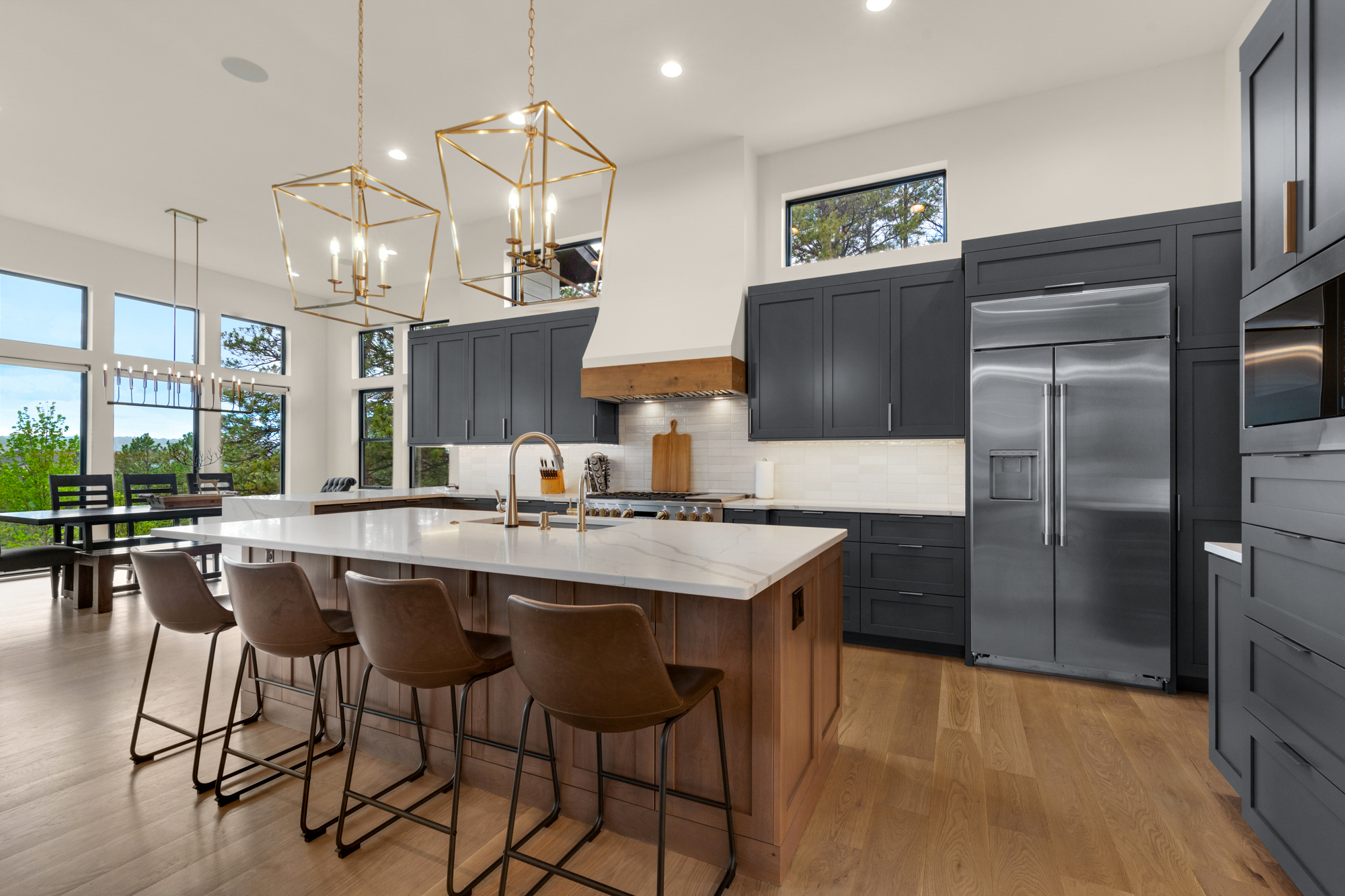
- The open-concept kitchen layout is the most popular in modern kitchen design, but other layouts may be worth consideration, too.
“Good food and a warm kitchen is what makes a house a home.” 
—Rachael Ray, noted American cook and television personality.
When clients start planning to build a custom home in the Colorado Springs area, we tell them to first focus on how to design a functional kitchen that will perfectly complement their lifestyle, says Murphy’s Custom Homes president and founding principal Tim Murphy. “A well-designed, functional kitchen ensures that it will truly become the heart and soul of the home,” he says. “Four walls, an entranceway or two, appliances, cabinetry, counters, and perhaps a kitchen table may not be conducive to modern living, so we encourage our clients to think outside the box.”
With over three decades of building stunning custom homes across Colorado Springs, Murphy’s Custom Homes knows how to design functional kitchens that meet all of their clients’ lifestyle needs and desires.
Start with Lifestyle and Layout Considerations
Coloradans tend to love the outdoors and want to feast on our region’s natural beauty when indoors. Thus, when planning the layout of your kitchen, make sure you position it where it can take full advantage of the home’s best outdoor views. As the heart of your home, you probably want your kitchen to serve as a focal point for entertaining and/or family gatherings. By considering open concept designs, you can meld the kitchen with other entertainment areas, like dining and living rooms. Otherwise, carefully consider the ease with which family members and visitors can flow between the kitchen and these other areas. This should also be considered in context with access to your outdoor entertainment areas.
A well-designed and sited kitchen optimizes functionality and its role in enhancing the usage and pleasures of the home’s other primary gathering spaces. With a plethora of layout and design options, you should consult with your custom home builder early in the design process to help determine which options will best suit your overall home design, square footage, and lifestyle.

The Work Triangle + Zoning: Why It Still Works
Despite the rising popularity of open-concept and other modern kitchen designs, the long-used kitchen work triangle concept remains an instrumental component of kitchen design. Arranging the three primary work areas, stove, refrigerator, and sink, in a triangular layout optimizes efficiency by creating paths for functional workflows and minimizing unnecessary movement. This concept works equally well in small and large kitchens, especially when the triangle pathway dimensions are balanced and not blocked by cabinets, islands, or other pathways through the home.
Experienced kitchen designers complement work triangles with zoning strategies that organize the kitchen into distinct functional areas tailored to specific tasks and usages, which can prove instrumental in ensuring the functionality of a multipurpose modern kitchen: Common kitchen zones include:
- Food preparation zone: Sink, countertops, and prep tools, ideally located near the refrigerator and food cupboards for easy access to ingredients.
- Cooking zone: Stove, oven, microwave, and other cookware, in proximity to pots, pans, and cooking utensils.
- Storage zone: Refrigerator and dry food ingredient storage.
- Cleaning zone: Sink, dishwasher, waste/recycling bins, and storage for cleaning supplies.
- Serving/dining zone: Designed to ease the transition from food prep to serving and/or provide space for in-kitchen eating.
- Entertainment zones: A standard component of open-concept kitchens, these provide space for people to gather without disrupting the kitchen workflow.
- Your custom home builder can be instrumental in helping you fine-tune finishes, lighting, appliances, storage, and other features to create your ideal kitchen.
Kitchen Layouts to Consider in Your Custom Home
The overall design, square footage, and view orientation of your custom home will undoubtedly influence the layout of your kitchen. The open-plan design concept, which combines adjacent living and/or dining areas with the kitchen, has emerged as the most popular kitchen design in this century’s new custom home building, both in Colorado and nationally. With multiple different configurations, the design helps maximize functionality, aesthetics, natural light, and home entertainment options. Many Colorado homes create an open-concept design that flows outside to decks or patios. Other kitchen layouts to consider include:
- L-shaped: Effective in both large and small homes, this layout uses two adjacent walls to create an L shape, with the work triangle spread across the layout, and perhaps an island or dining area in the open space.
- U-shaped: Three walls form a U shape, enclosing the work triangle and providing extensive storage and countertop space.
- Galley: Popular in smaller homes, two parallel walls align the work triangle linearly.
- Island kitchen: Describes any kitchen layout that centers around a freestanding, multi-function island.
- Peninsula: Similar to the island layout, features a counter/cabinetry that extends from a wall to form a partial barrier to another room, creating a semi-open-concept.
Finishes, Appliances, Lighting, and Electrical Needs
In planning your kitchen design, you’ll also need to consider finishes, fixtures, lighting, and electrical needs. Natural, eco-friendly materials like wood and stone reflect Colorado’s natural beauty, while bold, earthy color tones can mimic the landscape. Your choice of metals can be used to create a contemporary rustic look or emphasize a more modern, sleek design.
We recommend equipping new kitchen builds with the most energy-efficient appliances available to our clients. Because higher altitudes can lengthen cooking times, we also suggest that clients research appliances suitable for high-altitude cooking, such as convection ovens. Proper venting is also crucial for maintaining the freshness of your indoor air.
Layered lighting, with overhead, ambient, task, and accent lights, helps showcase the beauty of your new kitchen while also supporting the best in kitchen work efficiency. In today’s wired world, you’ll also want to equip your kitchen with plenty of outlets to ensure no lack of power for everything needed for cooking and entertaining. 
Storage Solutions That Don’t Sacrifice Style
When considering kitchen design options, work with your home builder to incorporate unique storage solutions, such as walk-in pantries, hidden cabinets, custom pull-outs, and built-in breakfast bars, to optimize kitchen efficiency without sacrificing any desired aesthetics. While a family’s storage needs change over time, most families find they need more rather than less over the passing years.
Why Custom Design Makes All the Difference
If you’re planning to build a custom home in the Colorado Springs area, work with an experienced home builder who has a portfolio of outstanding work. A skilled custom home builder will be glad to review their portfolio with you to help brainstorm ideas for determining how to design a functional kitchen that meets your lifestyle, aesthetic style, and future needs.
A custom home builder, like Murphy’s Custom Homes, can be instrumental in helping you design the perfect dream kitchen and then bring that vision to life. To learn more, contact us at (719) 488-8818, or fill out our online contact form or our free Cost Estimating form.
FAQs: How to Design a Functional Kitchen
Q: What makes a kitchen functional in a custom home?
A: A functional kitchen supports how you live, whether that’s cooking daily, entertaining, or juggling family routines. It includes efficient layout, smart storage, proper lighting, and intuitive appliance placement.
Q: Which kitchen layout is best for Colorado homes?
A: Open-concept kitchens with islands or U-shape layouts work well in Colorado homes, especially when paired with outdoor access. The best layout depends on lot size, mountain views, and how your family uses the space.
Q: How do I balance style and function in kitchen design?
A: Start with functionality, how you move, store, and cook. Then choose finishes and materials that reflect your style. In custom homes, the two go hand in hand.
Q: What lighting is best for a functional kitchen?
A: Combine natural light with layered lighting: overhead for general use, under-cabinet for tasks, and pendants for visual appeal. Smart lighting systems can boost convenience and ambiance.
Q: How much space do I need for a functional kitchen?
A: Most Colorado custom homes allot between 150–300 sq. ft. for kitchens. More space allows for islands, prep zones, and walk-in pantries, but a well-designed smaller space can be just as efficient.
Q: What trends are popular in Colorado kitchen design?
A: Mountain-modern aesthetics, energy-efficient appliances, oversized islands, and seamless indoor-outdoor flow are top design requests. Functionality is key, even in the most luxurious finishes.